Jersey Shore: the beaches, boardwalks and Victorians
One hundred and thirty miles of barrier island, sorted into the towns that are worth your weekend and the ones that are not — plus the beach tag rules nobody explains before you arrive.
The Jersey Shore is not one place. Cape May is a National Historic Landmark city of 600-odd Victorian buildings. Seaside Heights is a boardwalk with a roller coaster and fried everything. Long Beach Island is eighteen miles of narrow barrier island with no boardwalk at all. Treating them as one destination is why so many Shore trips disappoint.
This guide works from south to north, because that is how the coastline changes character — from the Delaware Bay's calm, bird-rich flats at Cape May, up through the big family boardwalks of the central coast, to the urban, music-driven stretch around Asbury Park.
Towns worth the trip
Cape May — the Victorian city at the end of the road
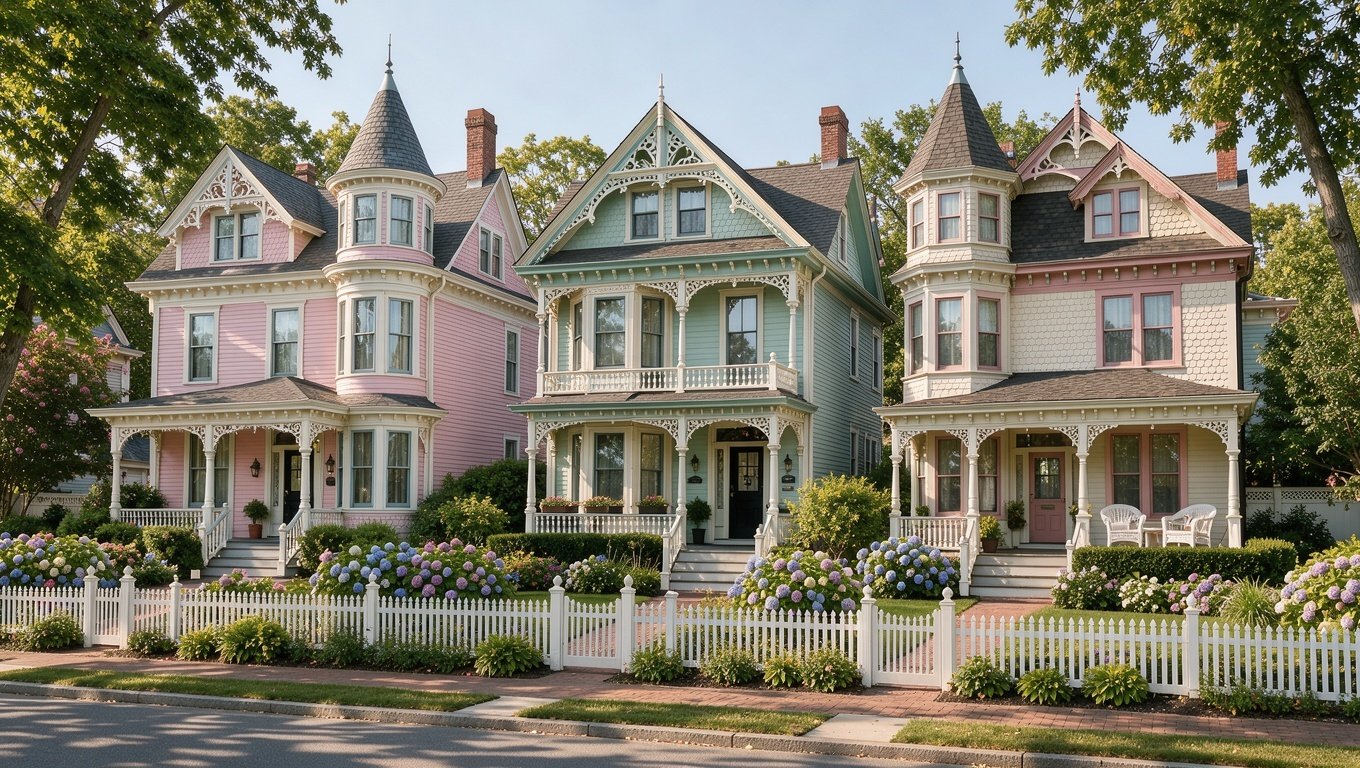
Cape May sits where the Atlantic meets the Delaware Bay, and it is the oldest seaside resort in the United States. The entire town centre is a National Historic Landmark, with roughly 600 surviving Victorian buildings in a walkable grid of painted gingerbread, turrets and wraparound porches.
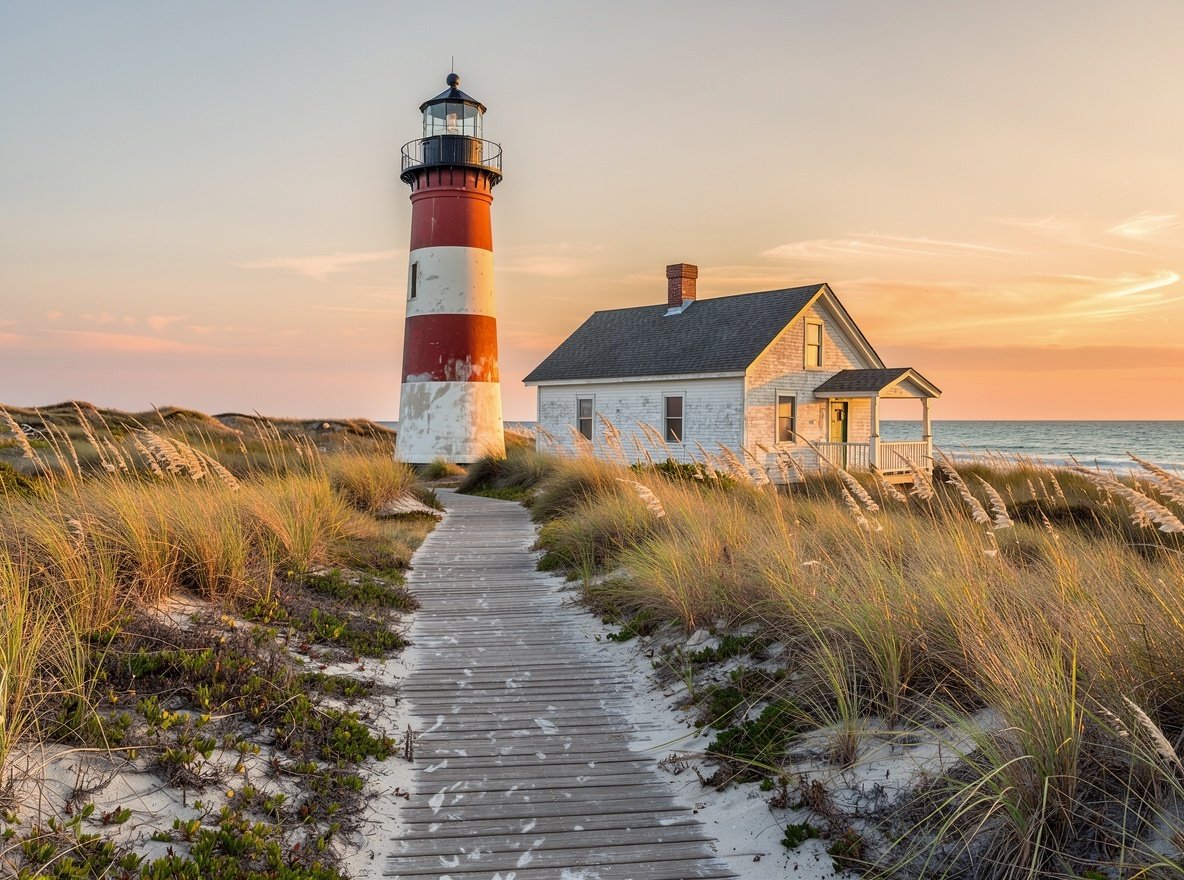
What makes it work as a travel destination rather than a museum is that people still live there. The house tours are real houses. The Washington Street Mall is a three-block outdoor pedestrian street of small shops. The Cape May Lighthouse, built in 1859, has 199 steps and a view across both bodies of water on a clear day.
Do this first
Walk Ocean Street and Columbia Avenue between 8 and 10am, before the day-trippers arrive. That is when the porches are being swept and the light hits the east-facing facades. The historic district is free to walk; individual house museums charge $8–$15.
Where to eat: Cape May is a serious food town for its size, with a strong farm-and-sea focus. Reserve dinner, especially Thursday to Sunday in July.
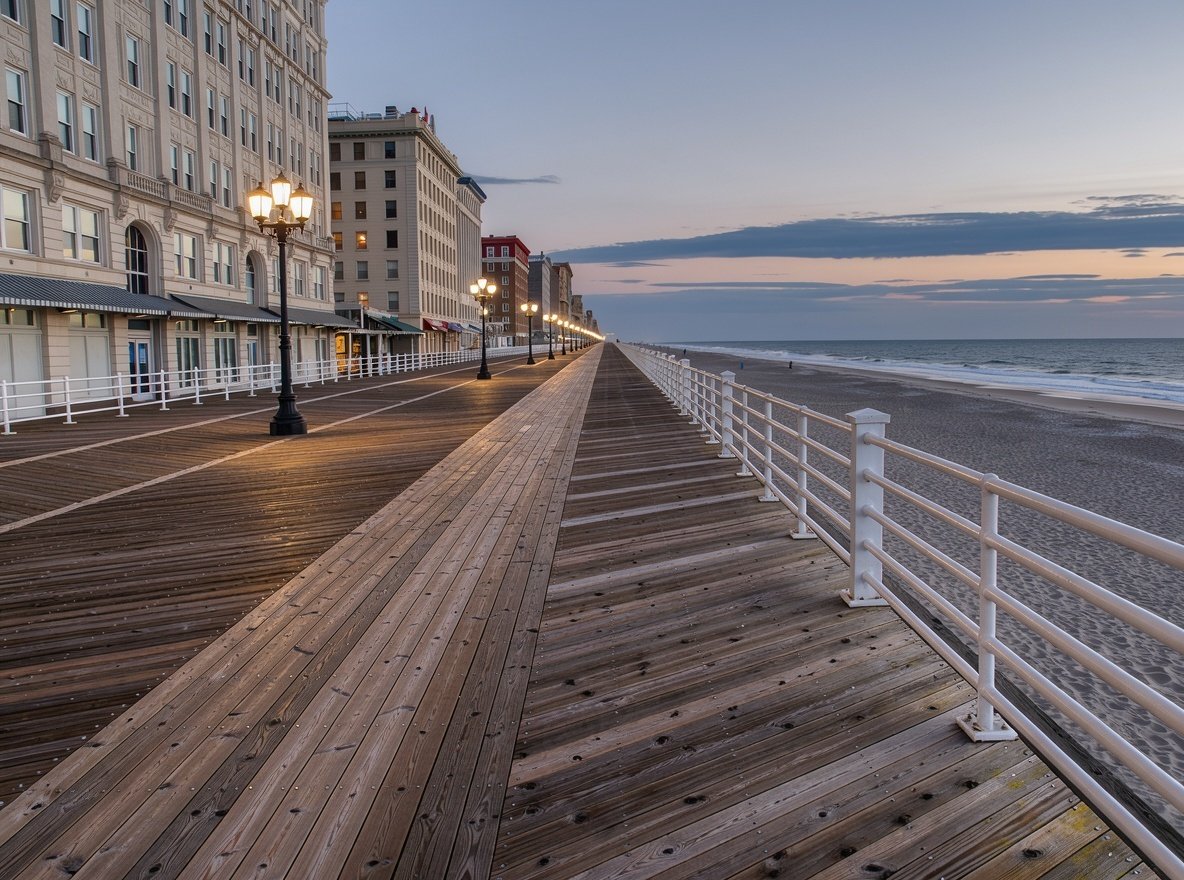
Boardwalk towns run from Victorian-quiet to full amusement strip within twenty miles of each other.Climbable lighthouses line the coast; the Cape May light is the tallest and the most photographed.
Wildwood and the Doo Wop motels
Wildwood is the Shore's loudest town and unapologetic about it: a 38-block boardwalk, three amusement piers, and a concentration of 1950s and 1960s "Doo Wop" motels with angular neon signage that has been recognised as a historic resource. It is the best value on the coast for families who want rides and beach in the same afternoon.
The beach here is unusually wide — in places a five-minute walk from the boardwalk to the water — and the sand is compacted enough to walk on comfortably.
Ocean City — the family default
Ocean City has been dry (no alcohol sales) since its founding, which shapes its character: early evenings, bicycle rentals, a two-and-a-half-mile boardwalk, and a beach that consistently ranks among the cleanest on the coast. If you want a Shore trip without a party scene, this is the answer.
It is also the best town for a first-time Shore visit with children: the boardwalk is flat and stroller-friendly, the surf is usually gentle, and everything is within a few blocks of the beach.
Long Beach Island — eighteen miles of no boardwalk
LBI is a single narrow island reached by one bridge at Ship Bottom, which is exactly why it feels different: no boardwalk, no amusement pier, no neon. Instead there are beach-block cottages, the Barnegat Lighthouse at the northern tip, and a bay side calm enough for paddleboarding.
Traffic on the single causeway is the defining practical constraint. Arrive before 10am on a summer Saturday or expect to queue.
Atlantic City — the four-mile boardwalk
Atlantic City's boardwalk is the longest in the world at roughly four miles, and the town's identity has always been built on scale: big hotels, big piers, the Steel Pier rides that have operated since 1898. It is not a quiet beach destination, and it is not trying to be.
Go for the boardwalk walk itself, the casino architecture, and the free beach — Atlantic City's beaches do not require a tag. Go elsewhere for a swim-and-read afternoon.
Asbury Park — music, food and a rebuilt waterfront
Asbury Park has spent two decades turning a derelict boardwalk into the most interesting mile on the coast. The Stone Pony, where Bruce Springsteen built his early following, still operates. The Paramount Theatre and Convention Hall are restored art-deco landmarks. Cookman Avenue is a genuine restaurant row.
This is the Shore town for people who do not particularly like Shore towns: less sand-and-fried-dough, more small plates and live music. The beach is free here too.
The Pine Barrens — the other half of the region
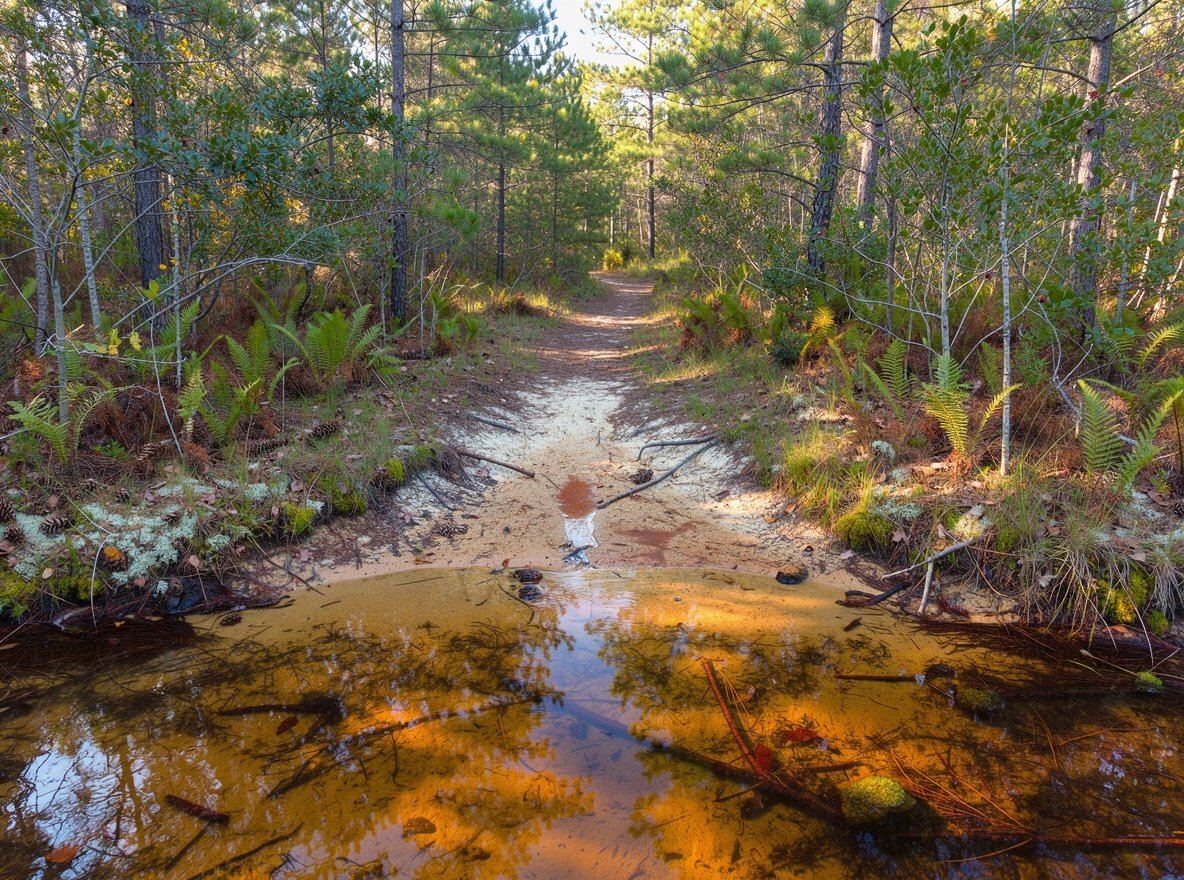
Immediately inland from the shore towns sits the Pinelands National Reserve: 1.1 million acres of pitch pine and cedar forest over sandy, acidic soil, with tea-coloured rivers running through it. It is a UNESCO-recognised biosphere reserve and the largest undeveloped area between Boston and Richmond.
Practically, this means you can pair a beach morning with a forest afternoon. Canoe and kayak liveries run trips on the Wading, Batsto and Mullica rivers; the Batsto Village historic site preserves an 18th-century ironworks hamlet.
Watch for: ticks are a real concern May through September — wear long trousers on forest trails and check afterwards. Carry water; the sandy trails are hotter than they look.
The Pinelands sit minutes inland from the beach towns — a useful rainy-day alternative.
Shore practicalities that catch people out
Beach tags
Most towns with paid lifeguards sell beach tags from late June to Labor Day. Expect roughly $5–$12 daily, $15–$25 weekly and $30–$50 for the season. Beach checkers walk the sand and will ask; buy at the entrance booth rather than from anyone on the beach. A handful of towns, including stretches of Island Beach State Park, charge per vehicle instead — that park's fee is per car and gives access to a long undeveloped beach.
Parking
Metered street parking near beaches runs $2–$4 an hour in season, and municipal lots $10–$25 per day. In Cape May, Ocean City and Asbury Park, arrive before 9:30am on a summer weekend or plan to park eight to ten blocks inland.
Traffic
Friday afternoons and Saturday mornings in July and August are the worst windows on the Garden State Parkway. If you can shift your drive to Saturday evening or Sunday morning, the difference is often an hour or more.
Rip currents
The Atlantic here produces genuine rip currents, especially in the two days after a storm. Swim only in front of an open lifeguard stand, and if you are caught, swim parallel to shore rather than against the current.
Is the Jersey Shore expensive in summer?
Accommodation is the cost that bites. A modest motel room within walking distance of a beach can run $180–$320 a night in late July, and Cape May's inns run higher. Camping at state parks and staying two towns inland cuts this substantially. September prices fall by roughly a third.
Which Shore towns have free beaches?
Atlantic City, Asbury Park, and a few others do not require tags. Most of the classic family towns do. Always check the specific town's website for the current year's rules, since fees and dates change.
Can I do the Shore without a car?
Partially. NJ Transit's North Jersey Coast Line reaches Long Branch, Asbury Park and Bay Head. Beyond that, the coast is car territory. Our transport guide covers the rail options in detail.